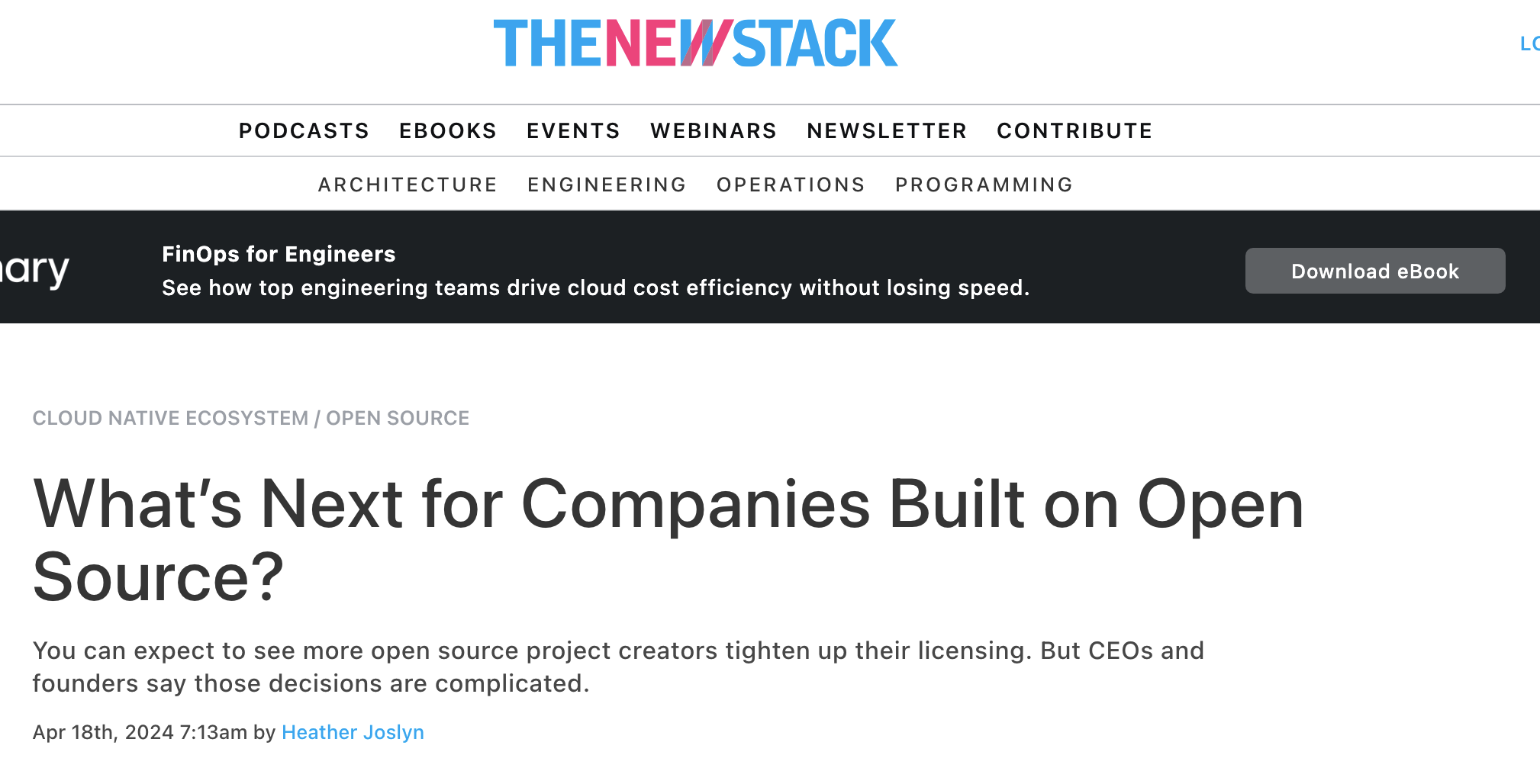
An article appeared recently in The New Stack about the progress of companies built on open source.
It focuses on the changes in licensing strategy of Cebo, a synthetic data company whose technology started at MIT’s AI lab, along with well known entries in the field like Hashicorp, Redis and Lightbend.
The article also said at a recent Kubecon, there was “lots of debate over whether the open source business model really leads to return on investment.”
The article has some interesting information, but unfortunately, like most press about COSS, it focuses almost entirely on companies that changed from open source to source-available licenses midstream. Those changes are what makes the headlines, but they don’t represent the real story of what is going on in the software business.
Most software startups today are either using source available from the beginning, or sticking with open source and making successful businesses anyway, by offering upsell like quality control, enterprise features, or managed services. Companies that go out of the gate with entirely proprietary licensing models are dwindling. While Oracle, Adobe, and Microsoft are still profiting from their proprietary licensing businesses, they are becoming more and more obvious outliers. The COSS business model is alive and well, and there are plenty of examples of open core business models leading to excellent returns on investment. For more facts, take a look at our Cossmology database.


Leave a Reply